
Mental Health Comes First for Gen-Z in Relationships
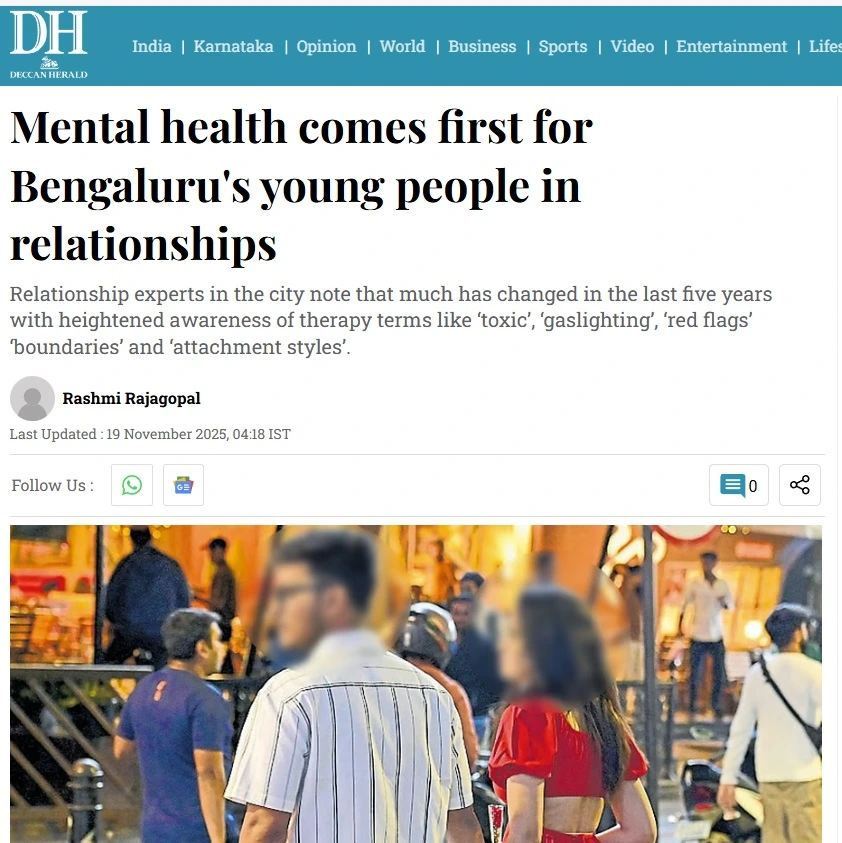
In today’s fast-changing social landscape, young adults are putting mental health at the heart of their relationships. This shift is especially visible among Bengaluru’s Gen-Z and young millennials, a cohort reshaping how we think about connection, commitment and emotional health. According to relationship experts, this isn’t just a trend; it’s a fundamental change in priorities and relational values.
Inner Dawn Counsellor Kala Balasubramanian’s views featured in Deccan Herald on 19-Nov-25.
Gen-Z and Emotional Literacy: Red Flags, Boundaries, and Compatibility
Five years ago, terms like toxic, gaslighting or attachment styles were mainly clinical jargon. Today, they’re part of everyday conversations among young partners and daters. This heightened emotional vocabulary reflects a generation that:
- Recognises red flags early
- Prioritises healthy boundaries
- Values self-awareness and mutual respect
Instead of suppressing discomfort, Gen-Z engages in conscious relationship building, treating emotional intelligence as a core aspect of compatibility.
Why Mental Health Now Trumps Old Relationship Norms
Several surveys indicate that a majority of young adults in India are comfortable discussing mental health with partners and see emotional support as a key component of a strong relationship. The Gen-z views that Openness about feelings is now seen as a relationship asset, not a vulnerability. Setting emotional boundaries is seen as a form of self-care and mutual respect.
These trends suggest that today’s young adults are not afraid to pause, reflect, and recalibrate rather than rush into connections that don’t align with their well-being goals.
What This Means for Relationship Culture
Gone are the days when silence about emotional needs was considered strength. Today’s young people are willing to initiate conversations about mental health early in relationships and evaluate if the relationship is enhancing their mental health or depleting it.
For relationship professionals, therapists, and anyone involved in couples counselling, these shifts signal a broader cultural moment, one where mental wellness is inseparable from romantic bonding.
Mental health, Emotional Awareness, Emotional literacy, capacity for Empathy are emerging as relationship parameters
Mental health isn’t just a sidebar in Gen-Z relationships; it’s often the central narrative that shapes how young adults choose, sustain, or exit partnerships. As emotional awareness becomes the new green flag in dating culture, we’re witnessing a healthier, more intentional form of connection that values well-being as much as affection.