
Loneliness in urban life, challenge in making meaningful connections
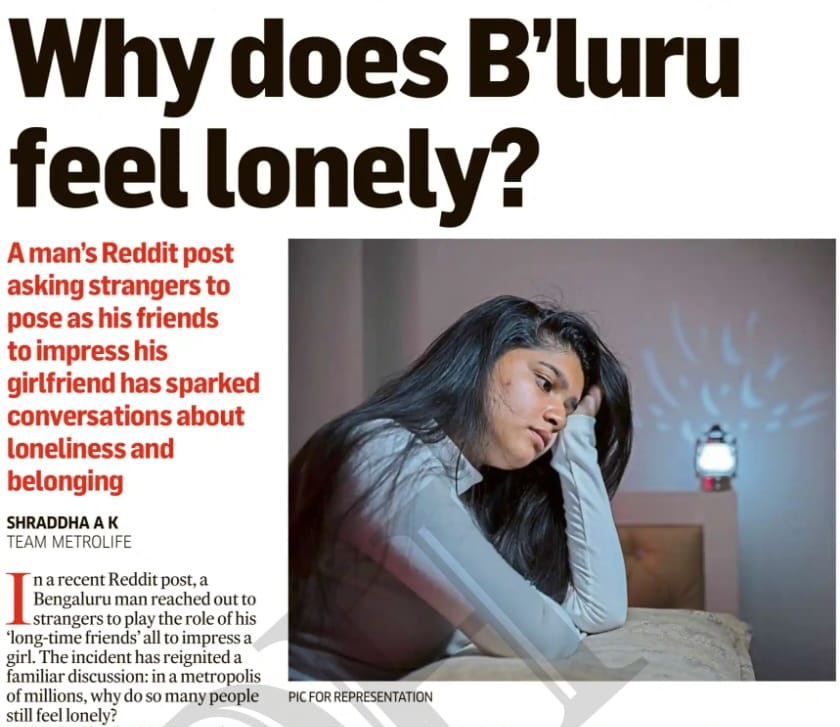
Bengaluru is often celebrated as India’s innovation capital, attracting thousands of ambitious professionals every year. Yet, beneath the city’s vibrant cafés, thriving tech parks, and bustling social scenes lies a quieter reality: an increasing number of people are struggling with loneliness.
A recent feature in Deccan Herald explores this growing concern and highlights expert perspectives, including Inner Dawn Founder Kala Balasubramanian’s views as a psychotherapist, on why loneliness has become one of the defining emotional challenges of urban living.
The Hidden Cost of Moving to a Big City
Relocating to a new city promises independence, career growth, and exciting opportunities. However, it also means leaving behind familiar support systems, long-standing friendships, and the everyday sense of belonging that develops over years.
For many young professionals, especially those who have moved to Bengaluru for work, the transition can be emotionally demanding. While surrounded by millions of people, they often experience a profound lack of meaningful human connection.
This paradox is becoming increasingly common in cities across the world.
Why Does Urban Loneliness Happen?
Several aspects of modern urban life contribute to loneliness:
- Long working hours leave little time or emotional energy for nurturing relationships.
- Lengthy daily commutes consume hours that could otherwise be spent connecting with friends or family.
- Digital communication often replaces genuine face-to-face interactions, creating the illusion of connection without emotional depth.
- Even at workplace, everyday contact doesn’t mean it will translate into meaningful connections.
- Highly repetitive routines can make life feel transactional rather than relational.
- Many people live in close proximity in apartment complexes yet may not know their own neighbors.
- One may have a big partying circle yet may not have someone to really share their emotions and challenges.
When these factors persist over time, loneliness can become more than an unpleasant feeling. It may increase vulnerability to anxiety, depression, and emotional exhaustion.
Loneliness Is More Than Being Alone
One of the biggest misconceptions is that loneliness simply means being by yourself.
Many people experience loneliness despite working in busy offices, living with roommates / family or constantly interacting online. Genuine emotional connection cannot be measured by the number of people around us. It is created through trust, vulnerability, and a sense of belonging.
Also read
Does technology overuse lead to more loneliness?
Are you in a Relationship and Still Feeling Lonely?
Modern cities often provide abundant opportunities for networking but relatively few opportunities for deep relationships.
Building Meaningful Connections
Although urban loneliness is a growing concern, it is not inevitable.
Developing meaningful relationships requires intentional effort:
- Participate in communities built around shared interests rather than convenience.
- Create regular opportunities for in-person conversations.
- Invest in friendships before loneliness becomes overwhelming.
- Be interested about others too, without becoming intrusive.
- Maintain connections with family and old friends, even after relocating.
- Seek professional support when loneliness begins affecting emotional wellbeing.
Small, consistent actions often create stronger social foundations than occasional large gestures.
A Conversation around Loneliness is Worth Having
The discussion around loneliness is becoming increasingly important as more professionals relocate for education and work. Recognising loneliness as a genuine psychological experience, rather than a personal weakness, is the first step toward addressing it.
I am grateful to have contributed to this important conversation in Deccan Herald, where I discuss how demanding work schedules, long commutes, digital lifestyles, and repetitive routines can quietly erode meaningful human connection and contribute to anxiety and depression.
You can read the complete article here:
Why Does Bengaluru Feel Lonely?: Deccan Herald feature
As our cities continue to grow, perhaps the next measure of progress should not only be economic opportunity, but also our ability to foster authentic human connection.